Oh, those Russians. I've mentioned on here before about how I find it hard to properly identify with their literature; something about being on the extreme opposite edges of Europe, my society inextricably linked with the other side of the Atlantic, theirs with the vastness of Asia.
But that's no reason not to keep trying. After all, there's a Strugatsky for every Solzhenitsyn, a Dostoevsky for every Tolstoy. And I'd actually read Mikhail Bulgakov before: his bizarre 1925 novella Heart of a Dog, about a mad scientist who creates a man-dog hybrid that goes off to become a Communist or something. The Master and Margarita is generally considered his masterpiece, and I was glad to find that it - just about - lived up to that reputation.
It's another of those novels where I simply cannot comprehend what the original publication would have looked like. Written between 1928 and 1940, The Master and Margarita is an absurdist satire of Moscow society and state-imposed atheism, as Satan and his companions descend on the Soviet Union to wreak havoc ahead of their annual party. How much of the violence, black magic, sex and ultimately Christian content that follows made it past the censors originally is hard to imagine; fortunately, as with pretty much everything else from the time, the book was eventually reissued uncut and unabridged for my reading pleasure.
And it is a fun read. Blending brilliant melodrama (an early scene where a character is decapitated by a tram is hilariously appalling), zesty dialogue and antics between Satan (or Woland as he names himself here) and his gang of misfit underlings as they go about their mischief, and cutting satire of the Russian intelligentsia so arrogant in their lack of faith, the plot races about from scene to scene at a breathless pace. Unfortunately, it's just a bit too inconsistent. Lengthy fictionalised accounts of the last days of Jesus, told from the point of view of Pontius Pilate, break up the narrative for no clear reason, characters are too numerous for sufficient development in most cases and there are moments where it tries just a bit too hard to be weird, to the detriment of the point.
But that's not to detract from what is a very witty and perceptive analysis of the perils of government interference in the beliefs of the populace, as well as an interesting interpretation of the opposing forces at play in Christian theory. Woland is a devil of the Russian Orthodox church, seeking to pervert God's creation: the Master, an infirm academic driven mad by his failure to make it as a writer, and Margarita, his lover who has grown depressed with her unfulfilling existence, see joining his ranks as their chance to transcend their problems on Earth, but to do so they mustn't lose sight of the penalties that come with it. There's also plenty of folkloric influence, as Margarita's initiation culminates in the Walpurgis Night-esque, hedonistic display of debauchery that is the peak of Woland's visit.
There are also some great scenes with a talking cat getting into a gunfight with the police, a landlord being told through the power of dreams to repent his miserly ways, and a rather gripping account of Pontius Pilate's secret service officers stalking through ancient Judea on their way to murder Judas. Like I said, a fun read.
All in all, it goes a long way to convincing me that attempting to complete the (decidedly finite) Russian canon might be a worthwhile aim.
4/5
Today I learned that the first ever Russian music video was inspired by this book. Groovy.
Ah, Eurovision. It's one of those things that slots into a singular category along with the likes of Marmite, astrology and Jeremy Clarkson: everyone out there has an opinion on it, and very few of those opinions are down the middle. Personally I'm a fan, and with Tim Moore rapidly becoming one of my favourite non-fiction writers, his book on the subject was an obvious choice.
I've always been intrigued by a loser. Because we all know that success is just down to obsessive hard work, self-improvement and, more often than not, the intangibles that just make you better than everyone else anyway; and so it's the stories behind those who come up short that are often more interesting. Eddie the Eagle, 2014/15 London Welsh, Liu Xiang pulling up before the start line at the Beijing Olympics. It's no coincidence that by far the most compelling season of Amazon's All or Nothing was the one that followed the Los Angeles Rams' dismal 2-14 season a couple of years back, or that by far my favourite YouTube discovery has been Todd in the Shadows' One Hit Wonderland: a look at the lives of artists who achieved one thing once and then not a lot else. Nul Points seems like a literary equivalent, as Moore delves into the dark side of the world's biggest talent show. What could it be like to get up there on stage, the hopes of a nation on your shoulders, only for literally millions of folks back home to ignore you completely? Well as it turns out, there are all sorts of tales to be told from before and after the big zero, from some fascinating characters who were determined - perhaps a little too much so - not to let the biggest failure of all define them.
There's Norwegian rock legend Jahn Teigen, the first to score nul points in what is generally considered the contest's modern era after his 1978 braces-twanging, high-kicking, rather tuneless performance of Mil etter mil garnered not a single sympathy vote from across the continent. He went on to form the Norwegian equivalent of Monty Python, is still respected in prog rock circles and now owns a recording studio and a micro-brewery. His is one of the more uplifting stories - in fact, it's really only matched by that of Finland's Timo Kojo, a former punk rocker who, halfway through his anti-nuclear anthem, decided for reasons that are still unclear, to start slapping himself in the face. He thought his final score was a hilarious middle finger to the establishment, although his countrymen, who take Eurovision very, very seriously, didn't agree. Still, that didn't stop him from rising to among Finland's elite; he now part-owns a country club and holds a patent for a floating golf driving range. Because of course. Oh and let's not forget Daníel Haraldsson from Iceland who had barely heard of the contest when he was thrust in at the age of 19, and went on to a successful career as an electronic musician and experimental artist. At the time of interviewing, he lived in a castle in Belgium.
Outside of that trio, things get considerably darker. You have the likes of Lithuania's Ovidijus Vysniauskus, completely nondescript on the stage and off both before and since, Austria's Thomas Forstner, who Moore almost completely failed to even track down, and Turkey's Cetin Alp - the 1983 final remains the only known footage of him performing. For others, it was worse still: rather than fading to obscurity, the likes of Portugal's Celia Lawson and Spain's Remedios Amaya were driven to a personal and financial ruin from which they never really recovered. Switzerland's wonderfully-named Gunvor Guggisberg was at the centre of a savage tabloid storm that left her bankrupt and effectively blacklisted from the entertainment industry: she went from Eurovision in May of 1998 to struggling to get bookings at local fairs by the end of the summer.
And let's not forget the utter travesty that inspired the whole book: the UK letting half a century of complacency get the better of us as Jemini took the stage in Riga in 2003, came in about half an octave flat of the backing track and spent the rest of the song failing to get back into tune... as perfomances go, it's by far the worst of any of these, most of which don't really seem notably bad compared to a lot of what's been out there. Pure and simple, an excruciating listen. Not their fault though - the track was apparently different to what they'd rehearsed with, leading to bizarre claims of sabotage in the wake of Tony Blair's entry into the Iraq conflict.
The worst story, though, would have to be that of Norwegian balladeer Finn Kalvik. A serious player in the Scandanavian folk scene, his 1981 tune Aldri i livet was penned by ABBA's Benny Andersson and featured backing vocals from the group's Anni-Frid Lyngstad; the closest, in fact, the group ever came to reappearing on a Eurovision stage after their 1974 win. In short, it deserved better; it's just impossible to pinpoint exactly why he didn't do better - too sensitive, too quiet, not enough of a show perhaps. In any case, he took the loss very badly: new releases became increasingly sporadic, the live show offers dried up and he was satirised mercilessly on Norwegian TV, all of which led to a self-imposed exile in Thailand, years of alcoholism and depression, and a seething hatred of the media that Moore ultimately feels in full force. It's a pertinent reminder of the human cost of failure and the dangers of competitive judgement of artistic endeavour.
In fact, his early encounter with Kalvik seems to put Moore off the project somewhat - in later chapters he runs out of steam; everything feels a bit more formulaic and hurried, there's less of a scratch beneath the surface of the people and more gleaned from past interviews and articles. Stylistically the prose can be clumsy at times and the witticisms do start to repeat.
But ultimately this is a fascinating insight into one of the world's most unusual events: Moore uncovers a fan community composed of flambouyant spectacle lovers and proper, committed statistics nerds, the latter of which provide a lot of the most interesting (or maybe tragic, I don't even know any more) facts in the book. Like how there is indeed a Scandanavian voting bloc, but Norway have always received far fewer points from their neighbours than they have given out, how national juries must be composed of four men, four women, four of which under 30 and four over, and how U2 bought up the staging of the 2005 contest for a future tour.
3.5/5
Yes, I've listened to all of these songs. Most are just forgettable; the worst by far is Remedios Amaya's godawful, tuneless, caterwauled flamenco-disco monstrosity Quien maneja mi barca? And of course the best is Aldri i livet.
With the tradition of reading a proper, serious book at the start of each new year now firmly in place, I decided that I could put it off no longer. It was time to read, and finish this time, Thomas Pynchon's magnum opus, Gravity's Rainbow. Seven years in the making, it remains the reclusive author's best-known work, a winner of several high-level prizes and a place on Time magazine's list of the top 100 books of the 20th Century.
I'd attempted it a couple of times before, previously getting a whole 8% of the way through (in fairness, the best part of 100 pages) before throwing in the towel. But now I came at it with more focus, more time and a willingness to put off any other books that might tempt me. So was it worth it? Hmmm...
Gravity's Rainbow is a book that, on paper at least, has a lot in common with two of my all-time favourites: Catch-22 and Infinite Jest. It shares the WWII setting and politically satirical ambitions of the former and the post-modernist style, huge cast of characters (over 400 of those) and disparate subject matter of the latter. Length-wise, it sits roughly between the two. So it's not a work to be taken on casually, and it was probably unfair of me to hold it up against them - but either way I found it very hard going from start to finish.
The plot and writing style are not so much twisting as labrynthine; it's effectively designed to get the reader lost, launching haphazardly into tangents and diversions that morph into fully-fledged chapters with no attempt to ever return to the original thread. Characters are firmly established only to disappear without trace for hundreds of pages, plot lines interweave and drift apart without apparent logic or rhythm, and the prose style, lurching from borderline academic literature to stream of consciousness to vernacular ramblings, can be enough to make you want to throw the book out of the window in despair at times. It must be said that things do get better - make it through the first part of four and you get into the groove both in terms of the story (character arcs and motives do start to slide into place) and the language, which is dialled back just enough as to be readable.
And the story, such as it is, is quite a fun one. The book opens at the house of Lt. Geoffrey "Pirate" Prentice in London in 1944, as he catches sight of a German V-2 rocket bomb on its way over the channel. We soon learn that Pirate is a member of a secretive group known as PISCES, employed by the controlling forces behind the war effort due to his ability to read the minds of others - or specifically to inhabit their dreams and fantasies and mould them to his own will. It's an intriguing premise, and one that I would happily have read a whole book on, but I never got the chance because Pynchon abandons Pirate early on, only bringing him back a couple of times much later to move the plot along. Instead, the narrative begins to focus more on Pirate's friend Teddy Bloat, assigned to track the movements of his American colleage Tyrone Slothrop, whose sexual encounters with women seem to be predicting V-2 strikes across London by a couple of weeks. It's from here that the plot really gets going, as Bloat and Slothrop are transported to the South of France, setting into motion a vast chain of events whereby Slothrop starts to get an idea of his real purpose in the war. Is it just paranoia, or has his whole life been under the control of higher powers, carefully calculating his every move for their own benefit? He decides to try to escape, embarking on a meander around immediately post-war Europe that involves plenty of escapades and colourful characters. The plot starts to come together into something of a detective story, as Slothrop decides his goal is to find the mysterious S-Gerät, a device housed in the V-2 rocket with the serial number 00000. There's all sorts of corporate espionage (the real war all along), meetings with the Illuminati and frankly uncomfortably realisitic depictions of the state of Europe around that time.
Again, I would probably have enjoyed a whole book on this plot alone, as Tyrone dashes around getting involved in drug heists, daring escapes from underground bunkers, hot air balloon chases, orgies for the continent's elite and a submarine full of Argentine rebels. Or indeed any of the mid-level sub-plots, like that of Tchitcherine, a depressed and drug-addicted Soviet career soldier trying to decide between the rest of his life in the Soviet zone of Germany or the wastes of Central Asia; or Dutch double-agent Katje Borgesius, a femme fatale for hire going around seducing information out of men; I even enjoyed the story of a lightbulb named Byron doomed never to go out and who tried to lead a global revolution through the world's electricity networks.
But Pynchon just keeps on derailing everything, setting off on endless attempts to break the reader through treatises on patents in the fields of electrical engineering and polymer chemistry (nice try, I understood a depressing amount of that), film studies (ditto), linguistics (three from three and I actually did really like that bit), and yes, a whole lot of things I couldn't get into, from theology and classical philosophy to art history and traditional American folk songs. So while the action sounds like a lot of fun, and is, it always seems to take a back seat to Pynchon's philosophical ramblings on what these long-range missles actually mean for humanity - like how we were always destined to create them, how they're an analogy for the Buddhist mandala and how, as the reader of the book, we're destined to follow the same path with it as the rocket does over the Earth. Yeah... stylistically it all feels a lot older than 1973, but looking at it from that perspective, the date of publication sits about right.
And it's a shame because there are some really brilliant moments. It's a bad choice of book to read on public transport - full of graphic sex and racial slurs and generally unsavoury subject matter - but also prone to genuine laugh-out-loud humour. There are songs and limericks and one-liners all over the places. The best scene: two stoned German drug lords sit blathering on about different strains of weed, when a troop of American soldiers come bursting in demanding to see their papers. The Germans' response completes one of the all-time great 1-2-3 punchlines. Oh, and credit where it's due for more or less tying up all of the plots properly by the end.
But that's not enough to elevate the work as a whole. It seems to be the consensus that the second read is a lot better, but I don't exactly feel compelled to go there - there's just too much slog for the reward, too much thinking involved. I know this is the kind of book I need to keep reading to further my love and appreciation of literature, but that doesn't necessarily mean this book in particular.
Or it can just be summed up by the following five-star review from goodreads.com: THIS BOOK IS ABOUT A MAN IN WW2 HE GETS ERECTIONS. I think Pynchon would have approved of that one. 3/5, although I reserve the right to change that if I ever read it again. And today I learned that this song is directly inspired by this book. Not sure what to do with that information.
There are many ways in which one can commit language to paper, and by far my least favourite of those would have to be poetry. Mostly because no one seems to be any good at it. Unpopular opinion perhaps, but Shakespeare was better at prose. So too was Wordsworth. Keats and Byron are utterly unreadable; as is most of Blake and Milton's work. A term of the WWI poets at school was enough to put me off them, and so much of everything else falls one side of bland, trite or forced. I'm not saying I could do any better, I'm saying that poetry is just extremely hard to do well. And so Shelley, Baudelaire and Christina Rossetti remained about the only poets on my good list. But now Walt Whitman's name can be added.
Leaves of Grass was Whitman's life's work. First publishing in 1855, he revisited the collection up until his death in 1892, during which time it grew from twelve to over 400 pieces. The poems touch on a wide range of topics but there does seem to be a shift over time as Whitman grew older and became more aware of his mortality - earlier poems celebrate the world around us and Whitman's optimistic humanist philosophy, and the achievements of mankind in creating the world's great societies, America among them. Then comes the American Civil War, which perhaps served as something of a loss of innocence for the writer, seeing brother turned against brother, but nonetheless providing opportunities to see small beauties in life. And then as he approaches later life, the tone becomes more reflective and solemn, showing more of an appreciation for the slower moments.
Safe to say, getting through nearly 500 pages of poetry was a task I have never even considered before. It was one I completed - but it was definitely hard going at times. Whitman employs a plodding, lengthy, free verse style that brings to mind the epic poetry of antiquity, and it's coupled with a tendency to labour the point. Several poems devolve into simply listing areas of the US or the world and describing their natural characteristics or the people that inhabit them; it's something he does very well but it comes up repeatedly. Likewise there are odd references that crop up regardless of the context - he seems to love talking about firemen, for example, or the rivers of America. But while it's a slog, at its best it is very good. It's hard not to be caught up in his enthusiasm over the natural beauty of his homeland, and his optimism for the future of humanity. He emphasises that every member of the human race should be considered equal, which was presumably pretty radical given the time and place, and states that modern society and democracy is the world's crowning achievement. I wonder what he'd make of things today.
Whitman's original edition of Leaves of Grass was short because he wanted it to be a book that the reader could carry with them and read in the open air; while I didn't manage that, I did particularly enjoy his appraisal of the natural world. Plus, his shout out to readers hundreds of years in the future did make me smile.
3.5/5
Sometimes it's better just to look on the bright side.
Cast your mind back ten years or so, and you may recall what a spectacular cultural phenomenon Top Gear used to be. There was the TV show, to start with: at its peak, more than eight million people decided that was how they wanted to spend their Sunday evenings. And then there were the feature-length special shows, the live show, and endless merchandise and tie-ins. Not bad for a magazine programme based on middle-aged men reviewing the latest cars. You can point to various reasons why it exploded the way it did: the subsequent success of The Grand Tour while the new Top Gear seasons have floundered shows that producer Andy Wilman was probably a big part of it; the way the show kept throwing in new ideas, running jokes and celebrity appearances doubtless drawing many in. But, when it comes down to it, I think most would agree that the show's three presenters were the main draw, for their banter, sometimes very interesting historical pieces, and the way they all balanced each other so nicely. There was the brash, bombastic Jeremy Clarkson for the red-blooded, red meat-eating views who were in it for the supercars and explosive stunts; the cute and cuddly Richard Hammond for the families looking for some light entertainment. And then the reserved, cultured James May for anyone left who was looking to learn something about the nuts-and-bolts engineering behind the various machines they showed off.
All three had their roots in straightforward journalism; all three, their TV fame notwithstanding, wrote for some of the UK's biggest newspapers and specialist magazines. And I've read writing by all of them, which is why I feel qualified to say that Captain Slow is the best writer by some way. Yes, Jezza and Hamster could be brilliant at times - Clarkson's article on what he would do if elected Mayor of London is one of my all time favourites - but May takes a much more measured, intellectual approach that means, taken as a whole, his body of work is a lot more consistent. Car Fever collects together writing from his columns in Top Gear magazine and the Daily Telegraph as Top Gear was entering its golden age, from around 2006 to 2010, and while cars are mentioned in some way in every article, they are often far from the primary focus. Instead, we are treated to May's insights on such things as government transport policy, interior decorating, the French and Christmas carols.
And the writing is just splendid at times. While I can't claim to have read everything they've ever written, it's hard to imagine either of his colleagues using terms like "louche" or "rent asunder", or quoting Samuel Johnson or W.B. Yeats. Or the Bible. In one piece, in hindsight quite possibly written after a day sampling a few too many Californian wines while filming his series with Oz Clarke, May ramps up the virtuosity to dizzying heights. Forget the motoring press, how many journalists full stop could get away with dropping such words as "ruched", "for'ard" or "paean" into what is, after all, a review of an American mobile home? But the fact is, May is just as much a perfectionist when working with the English language as he is when rebuilding or restoring a car, and it's hard not to be caught up in his enthusiasm for romanticising the engineering feats of the past and present, whether good or disastrous.
They say you should never meet your heroes: I've been told by a motoring journalist who has met James that, nerdy exterior notwithstanding, he's actually quite arrogant and opinionated, and I have to say that side of him can simmer in the background sometimes here, particularly when attacking Alistair Darling's ill-advised road schemes. But that doesn't detract what is ultimately an engaging, beautifully written and, yes, amusing collection of short-form journalism.
4.5/5
Been a while since the writer of the book also provided the song, so... yeah.
Algernon Blackwood's 1907 novella The Willows was another work I added to my collection of classic horror literature on the recommendation of NPR's top 100 list, and one I had intended to read a bit closer to Halloween - but my big project got in the way somewhat. Anyway, tipping the scales at just over 100 pages and praised by H.P. Lovecraft himself as the finest supernatural tale in English literature, I decided it would be worth squeezing in.
The Willows is an account of two men canoeing down the Danube from Bratislava (or Pressburg as it was at the time) towards Budapest. Things start to go wrong for them as they get further from civilisation, the water gets rougher and the forest starts to close in around them. Maybe it's just their imagination, but the willow trees that line the banks seem to come to life, and display possibly threatening - although not necessarily towards the two men directly - intentions. Trapped on a rapidly shrinking island of sand, their equipment and supplies diminshing, our protagonists come ever closer to losing their grip on reality and the willows become increasingly sinister.
All in all, it's not a bad story, and well written at that. I can see why Lovecraft was such a fan; it was clearly a huge influence on his cornerstones of weird fiction that came shortly after. But it does suffer from a lot of the flaws that, for me, make his writing something of a struggle: the stoic, po-faced tone, the firmly turn-of-the-century turn of phrase and the attempts to eff the ineffable that generally don't quite work. What it gets right, though, are the biggest scares of all: the unknown, the idea that there may be forces out there so great that humanity pales into insignificance, and the way in which we are never so helpless as when we are at the mercy of the elements.
A short review for a short book - The Willows deserves its place in the horror fiction canon, but it won't go much further than that. Blackwood's other famous work, The Wendigo, is now on my radar.
3.5/5
I've actually been on a boat down that part of the Danube. Seemed pretty chill to me.
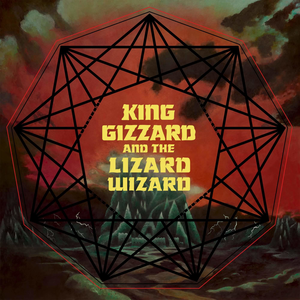
10. King Gizzard and the Lizard Wizard - Nonagon Infinity (2016):there are a few artists on this list who may have deserved more than one album but no decision was harder to make than when it came to King Gizzard and the Lizard Wizard. Since emerging at the start of the decade, the Melbourne rockers have released a ridiculous 15 full-length albums, including five in 2017 alone; ear-melting excursion into Middle-Eastern scale cycles Flying Microtonal Banana and brain-melting excursion into African-style polyrhythms Polygondwanaland being my personal highlights. They also put out two extremely solid efforts this year, in environmentalist psychedelic freak-out Fishing for Fishies and straight tribute to '80s thrash metal Infest the Rats' Nest. But their best, for me, is the album that broke them out of merely being one of the best Australian alt rock groups and laid the foundation for all of their releases since, establishing the group as a proper global name. King Gizz love a concept, and Nonagon Infinity is one of their best - an album where the end of the last track joins up seamlessly with the beginning of the first, meaning it could, in theory, be played for eternity. And it's a pretty good choice for anyone who would want to try that. The opening bars of Robot Stop set the tone, a chugging, driving garage rock beat that reappears as a leitmotif on several other tracks and, of course, acts as the ending of metal-inspired closer Road Train. And the bits in between keep things interesting. Big Fig Wasp, Gamma Knife and People Vultures act as a kind of extended medley for the first half of the album, with themes and melodies cropping up in various places throughout, plus plenty of space-age sound effects, harmonica solos and brilliant vocal work from Stu Mackenzie. Things then get a little more experimental on the likes of the 7-minute Evil Death Roll, jazzy Invisible Face and two grooving tracks that throw back to the band's psych beginnings, Mr. Beat and Wah Wah. Michael Cavanagh and Eric Moore battle as twin drummers, Joey Walker and Cook Craig create riff after memorable riff, and Ambrose Kenny-Smith and Lucas Skinner anchor things with deceptively tight organ and bass work. Play it over and over again, play it in reverse order, play it on shuffle, play all of the tracks at once... okay, so that last one probably wouldn't work, but the fact it's even a consideration is testament to how fun an idea this is, and how well it has been executed.
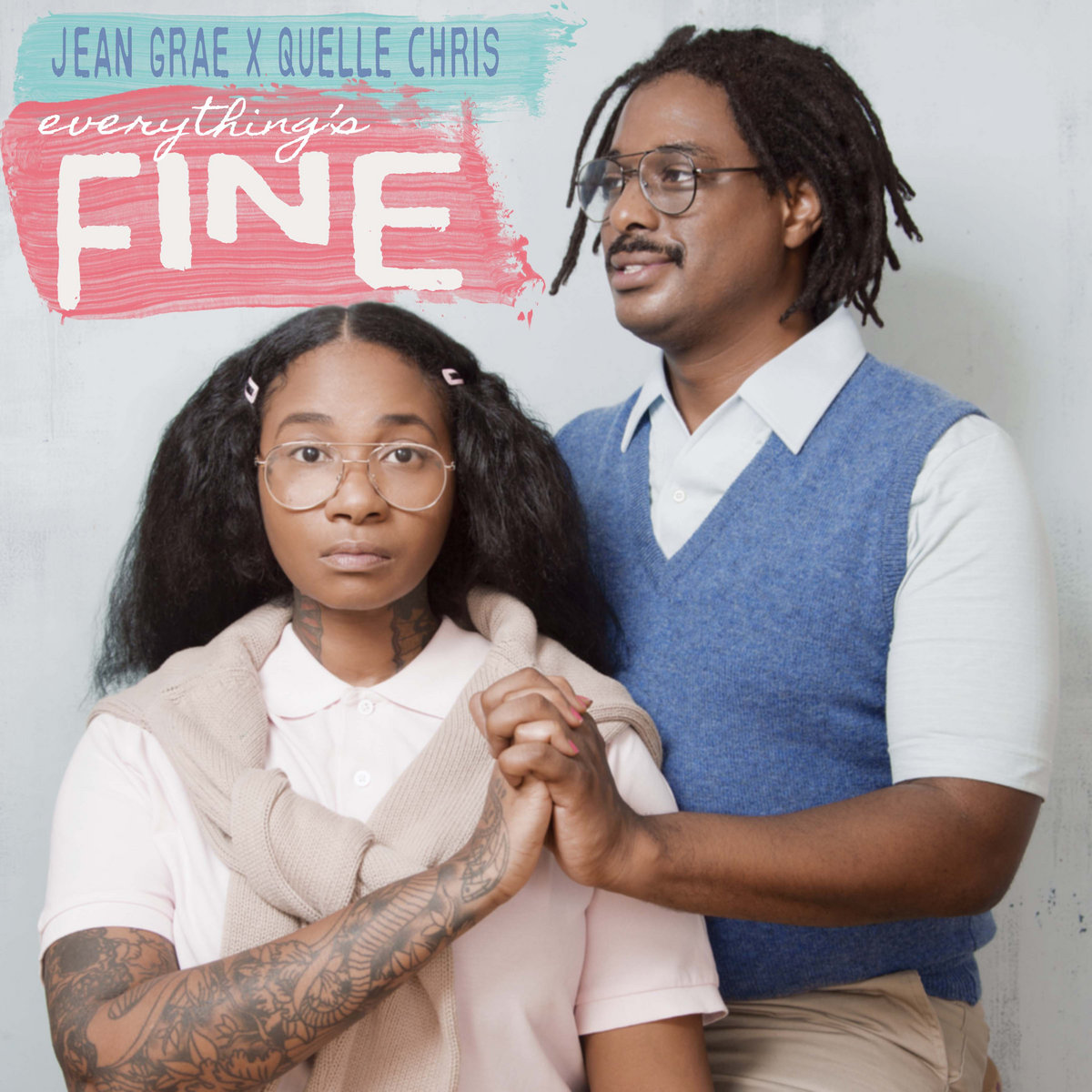
9. Jean Grae and Quelle Chris - Everything's Fine (2018): the decade was positively rife with introverted, intellectual, self-exploratory hip-hop albums - a few of them made this list - but head and shoulders above the rest is this collaboration by New York's Tsidi Ibrahim (Jean Grae) and Detroit's Gavin Tennille (Quelle Chris). Forget The Carters, this was the husband-and-wife event album of the decade. Everything's Fine is a satirical, acerbic and at times hugely sensitive trawl through the pressures and anxieties of modern life; a life in which, increasingly, it feels like the only way to self-express is to say that everything is fine, even though the world seems to make it increasingly hard for that to be true. Jean Grae and Quelle Chris explore that world in depth here, and no one is safe from their biting wit: from politicians and corporations to Instagram influencers and redneck racists, people from all sides of the coin come under deserved fire for their inherent ability to make life more complicated. And while some of those targets may seem obvious, the lyrics and concept are genuinely highbrow stuff: from the opening Everything's Fine, which uses a parodical game show setting to introduce the album's idea, through My Contribution to This Scam, in which Jean Grae and Quelle Chris trade bars about life's frustrations, big and small, to the likes of Peacock and Breakfast of Champions, intensely frank examinations of the mental health issues that so often build up under the surface veneer of everything supposedly being fine. There's plenty of musical variety as well: lead single Ohsh features a bumbling, bubbling bass line, House Call goes for full-on '90s-style G-funk, Scoop of Dirt is the biggest beat of the album thanks to heavily distorted keys and closer River is based around melodramatic piano, guitar, and the soulful vocals of Anna Wise. Comedians such as Nick Offerman, Hannibal Burress, John Hodgman and Michael Che add weight to the spoken-word interludes - often a sign of undercooked songwriting on rap albums, but here adding to the avant-garde tone of it all. The two rappers complement each other well, too, Jean Grae building layers of savage wordplay and takedowns, Quelle Chris remaining more deadpan and laid back. Rap really doesn't get much classier than this.
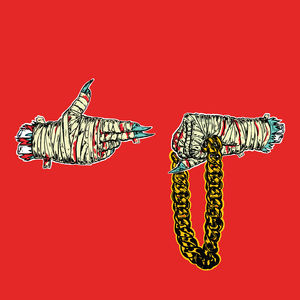
8. Run The Jewels - Run The Jewels 2 (2014): and then there's Run The Jewels. Like Jean Grae and
Quelle Chris, the duo hail from two cities with serious rap pedigree - Jaime "El-P" Meline from New York and Michael "Killer Mike" Render from Atlanta - and both have careers stretching back to the early 1990s in their respective scenes. They came together in 2011 and have since released three self-titled albums; all solid, but the best came in the middle, being the tightest both muscially and lyrically. Run The Jewels 2 comes in with an impossible amount of swagger in the pounding, saxophone-inflected beat of lairy intro track Jeopardy, and the pace doesn't really relent after that. El-P takes the reins on production, providing earth-moving beats and a brooding, dense synth backing that takes inspiration from the electronic pioneers of the 1980s. I have genuinely never found a set of speakers that can properly handle the bass on Oh My Darling Don't Cry, which gets the body of the album off to a thumping start, and tracks like Blockbuster Night, Pt. 1 and Lie, Cheat, Steal aren't far behind. The guest spots are suitably left-field: Rage Against The Machine vocalist Zach de la Rocha and Blink-182 drummer Travis Barker are the big names and slide into their roles well, Jordan "Boots" Cruz - one of Beyoncé's preferred songwriter contributors - pops up on Early, Lola "Gangsta Boo" Mitchell gets stuck in on the absolutely filthy Love Again and Diane Coffee provides a touch of welcome sensitivity on Crown. But again, it's the tandem rapping skills of El-P and Killer Mike that make this what it is, as they bounce lyrics back and forth between each other as if they'd known each other for much longer. It's political at times; anarchistically so, with plenty of contempt for social injustice, police brutality and the political inefficiency that has allowed things to get this far. They're really at their best, though, when not focusing on any particular subject, allowed the freedom to juggle wordplay and giggle-inducing self-aggrandising at impressive pace. Run The Jewels 2 is one of the best workout albums of all time - and nothing else on that list can make you mentally smile as much at the same time. As Blockbuster Night, Pt. 2 rounds things off with a trumpeting elephant and an odd shuffle beat, there's not much else to be said: it covers more ground in 40 minutes than a lot of artists manage over an entire career.
7. Queens of the Stone Age - ... Like Clockwork (2013): there has been some great music made by artists in huge physical or mental pain. Some of it came close to this list: John Grant, who produced some of his best work following his HIV diagnosis; Sephine Llo, who released I Your Moon in the aftermath of her husband's death; David Lamb, who recorded Brown Bird's final album as a farewell before his passing from leukaemia. The story behind ... Like Clockwork is truly astounding. Following routine knee surgery in 2011, Queens of the Stone Age main man Josh Homme ended up comatose for four months; he was actually pronounced medically dead on the operating table. This album was recorded shortly after and remains probably the group's second-best work - an affirming, defiant set of survival anthems borne of one man's unique experience. It's the sixth album released under the Queens of the Stone Age name: if I were to produce a list of this type for the previous decade, 2002's Songs for the Deaf would undoubtedly be in the top three, but this is a very different prospect, a result of a changed group and a changed leader. Listening to it again, I was surprised at how upbeat it all sounded - certainly more so than I remembered. Perhaps that's because it's the more solemn tracks that stand out: gothy piano ballad The Vampyre of Time and Memory and then the double closer of I Appear Missing and ... Like Clockwork, the latter two tracks being the moment where Homme tackles his experience most directly, with mentions of hospital robes and the brink of the abyss, and then a pondering of where to go next. But for the most part this is an album with a distinctly positive spirit. The opening Keep Your Eyes Peeled snarls along like the best of their middle period, If I Had a Tail and My God is the Sun strut and preen with the grooves of Homme's early work in the East Californian alternative scene. Kalopsia starts off atmospheric and spooky thanks to Trent Reznor's eletronics, but culminates in a sound more like Pearl Jam or Alice In Chains. The remaining two tracks, Fairweather Friend and Smooth Sailing, are undeniably catchy and not without their experimental moments; overall it's just an extremely polished and well-rounded album. Matters are helped by the return of some of Homme's best past collaborators: the ever-dependable Dave Grohl on drums and the ever-inventive Dean Fertita on guitar, while Nick Oliveri, who left the group under a cloud in 2004, returns to back things up on bass. Screaming Trees vocalist Mark Lanegan provides some grit, too, and Alex Turner and Elton John make interesting cameos. But for all the gloss, this still feels like an album that is deeply personal to Homme, tapping into the kind of feelings that very few people will ever know.
6. Triggerfinger - By Absence of the Sun (2014): the Antwerp power trio finally hit their peak with their fourth studio album, a slice of brash, brutal, bruising and downright loud garage rock. Game bashes down the door with its opening muscular riff, Ruben Block's guitar strings screaming, albeit never quite in protest, Mario Goossens hammering at his drums like a man possessed and Paul van Bruystegem anchoring things with a shuddering bassline. But what elevates this above the rest of their work, and makes it the highest-placed out-and-out rock album on the list, is Block's songwriting and vocal work. He never fails to be sensitive and melodic, even when positively wailing out the chorus of this opening battering ram of a track, and it's this heartfelt, crooning, sometimes sensual style that makes the rest of the album so special as well. Game is perhaps the best song, with its scorching guitar solo and sweaty lyrics, but there's really not much of a gap to the rest. Perfect Match is more or less a straight love song, albeit a very cocksure and sultry one, with a blues-rock riff and a stadium-ready chorus; the title track dials back the noise somewhat for its tuneful, road-trip sound; And There She Was Lying in Wait and Black Panic are as heavy as it gets, the latter an absolute juggernaut that descends into anarchic chaos at the end. For all the headbanging, though, the pervading theme is subtler: songs like Big Hole, Off The Rack, Splendour in the Grass and Trail of Love are all more melancholy, gentle, and the result is a much deeper, more varied album. Possibly the weakest tune is also the most interesting, Halfway There representing a departure into moody electronics, and Master of All Fears signs off with more searing riffing and howled vocals. This is a band on top of their game: they know they're good, and getting better, and they let their music do all of the talking. While Block may be the main creative force, he never dominates things, and the group work in perfect balance with each other throughout. From their sharps suits on the album cover, to the effortless swagger of their music and lyrics, rock really doesn't get much classier than this.
5. Father John Misty - Pure Comedy (2017): every once in a while, a song comes along that completely stops me in my tracks. Josh Tillman is a songwriter who had been on the edge of my radar as the brains behind Fleet Foxes, but as a solo artist writing under the Father John Misty nom de plume, he has become so much more. This album's title track left such an impression on me that it has been the only song in the past three years that I knew I had to learn to play right away - it just seemed like it could be important. Pure Comedy is a vast, epic piece dealing with the idea of human existence through the medium of just slightly left-field piano backing, swelling brass and strings and brilliantly poetic lyrics exploring the futility of life in the bigger scheme of things, but also condemning the way the human condition prevents us from making the most of it anyway. The subsequent album deals with similarly weighty themes: Total Entertainment Forever predicts the future of a human race totally devoted to ever more on-demand media, Things It Would Have Been Helpful to Know Before the Revolution takes a wry look at the potential hypocrisy of the environmental protest movement, Two Wildly Different Perspectives is Tillman's spin on the death of bipartisanship in the US and The Memo takes aim at big business with some of the album's best satirical barbs. Tracks like Ballad of the Dying Man, Birdie, A Bigger Paper Bag and When the God of Love Returns There'll Be Hell to Pay are less specific but nonetheless deeply philosophical, asking the biggest questions about mankind's purpose and existence. It's a songwriting approach that has often been criticised as self-congratulatory, but I disagree. In an artistic landscape where our films are three hour one-liner-and-fight-scene marathons (not a criticism of the Marvel output, by the way), our music is increasingly manufactured and hyperactive (not a criticism of pop music, by the way), and our literature seems doomed to irrelevance, it's perhaps jarring to come across an artist who is so unapologetically serious. And indeed this is to a fault at times: yes, Leaving LA needs to be long to make its point, but probably could have been shorter than 13 minutes, and sappy country ballad Smoochie could have been dropped altogether. But there's little else wrong with this, especially given how Tillman wraps things up: So I'm Growing Old on Magic Mountain being a sincerely whimsical song building to a stunningly beautiful musical conclusion, and In Twenty Years or So finishing on a genuinely optimistic note. And the title track elevates this to masterpiece status anyway. Most of the songs here are songs for our time. Pure Comedy is a song for all time.
4. Swans - To Be Kind (2014): for an album to be two hours long without ever getting boring, it has to be something pretty special. Swans emerged from the avant-garde "no wave" scene in the early '80s, and have released some of the most forward-thinking and accomplished albums of the past 40 years. To Be Kind is their thirteenth, and their third since reforming in 2010 after a lengthy hiatus. It is, at its core, a blues album, but it draws its inspiration from the swampy, muddy, rough-shod blues of Mississippi and Louisiana rather than the jazz-inspired, cosmopolitan sound of the group's native New York. This provides a much more sinister, esoteric, folkloric sound, something akin to stumbling on some arcane ceremony in the darkest corner of America's wilderness: centrepiece track Bring the Sun / Toussaint L'Ouverture may stretch out for 34 minutes, but every second of it demands your attention; it builds bar by bar, phrase by phrase into a ritualistic frenzy that seems ready to crush you with the power of the sun itself. And then it breaks down into a meditative portrait of the titular Haitian revolutionary, frontman Michael Gira barking out lyrics in French and Spanish over a vaguely tropical backing. The song even merits its own cool-down coda in Some Things We Do, a minimalistic poem of a tune that drifts away into the void. To rewind a bit, it's the opening Screen Shot that sets the tone, starting out with a jittery bass line and incessant vocals from Gira, with the occasional stroke added to the sonic canvas - a funereal drum beat here, a chilling piano melody there - until the song explodes without warning into a full-scale shuffling blues-rock tune. Just A Little Boy, dedicated to Mississippi blues legend Howlin' Wolf, follows up with the album's most direct nod to its roots, with sinister slide guitar work by Cristoph Hahn and rock-solid swung drumming from Thor Harris. A Little God in My Hands is a madness-inducing, relentless seven minutes that culminates in eerie chanting; She Loves Us takes seven minutes just to settle into its groove, but rewards us with perhaps the album's catchiest rhythm and distinctly Asian choral vocals. Kirsten Supine slows things down again to almost a complete stop before Oxygen cranks up the tempo in the work's most straightforward rock song - albeit one with edgily atonal riffs and occasional bursts of chaotic brass. Credit here to guitarist Norman Westberg, doing so much while staying true to the limitations of the genre. Nathalie Neal and the closing To Be Kind are just desolately pretty pieces of songwriting, and both build from heartbreaking melodic sections to shattering, obliterating crescendos; legitimately, a soundtrack for the end of the world. To Be Kind is a transformative experience: listen to it, and you'll never look at music the same way again.
3. Major Parkinson - Blackbox (2017): at any other time in history, Major Parkinson would be the type of band that I would never have heard of. Obscure even in their native Norway, venturing rarely to other countries and passive when it comes to marketing, they would simply have come and gone without even entering my radar. But we live in the present, and this is why I truly believe there has never been a better time to be a music fan. And so, one day in early 2010, Spotify decided I had more or less exhausted everything worth hearing from the alternative rock scene of the American Northwest, and instead suggested I would enjoy something from the European Northwest. There are bands on that list that I still listen to regularly: Motorpsycho, Thulsa Doom, Audrey Horne, Kaizers Orchestra. De Staat cropped up in that period as well. And Major Parkinson. Their 2008 self-titled debut is just an incredibly solid artistic rock record, and 197 and Awkward as a Drunk are still among my favourite songs. Songs from a Solitary Home was the soundtrack to my first days at university, and Twilight Cinema the soundtrack to my last. And then, in 2017, they topped the lot with Blackbox. It's just a different beast - two years in the making, featuring the group's most expansive lineup, a full orchestral backing and a female-voice choir, the album whisks you away on a journey through the dark, frozen north; it's Scandinavian noir given a musical voice. Lover, Lower Me Down! announces the stylistic intentions with booming drums and a swirling, sinister synth backing; main man Jon Ivar Kollbotn growls along in the very depths of the male range as the music opens out into twanging guitars and shouted choral vocals. Night Hitcher picks up the pace a bit with maybe the work's most memorable chorus. Isabel - A Report to an Academy and MadelineCrumbles blend the dark aesthetic with something approaching pop songwriting, while Baseball is literally a 10-minute song called Baseball, that wanders around in gloriously aimless fashion, picking up and dropping themes as it goes. Before the Helmets and Strawberry Suicide are the band at their stripped back, intimate best, as Kollbotn does his best Tom Waits impression and violinist Claudia Cox lends her virtuoso skills to the mix. Founding member Eivind Gammersvik is as solid as ever on bass and Sondre Veland deserves a medal for working out drum lines to all the chaos, but a large slice of the credit must go to Lars Bjørknes for his synth, piano, organ and programming work - without him, this would not have sounded anything like the end result. As the closing title track builds to its thunderous orchestral conclusion, I can't help but be grateful that this weird and wonderful Norwegian masterwork found its way to me. It's also a world away from A Boat on the Sea, making guitarist Sondre Skollevoll the only artist to contribute fully to two albums on this list. Well deserved.
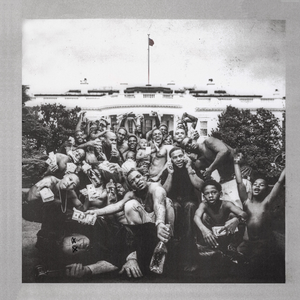
2. Kendrick Lamar - To Pimp A Butterfly (2015): there are some albums that simply transcend the medium of music. By 2015, Kendrick Lamar had already established himself as one of the best rappers around: his early mixtapes generating considerable buzz for both their complex, high-minded lyrics and unorthodox production. He stepped things up, though, in 2013 with Good Kid, M.A.A.D. City, which realistically would have made the top ten of this list as well, a sprawling, meandering, but hugely astute concept piece following the last day in the life of a young LA gang member. To Pimp A Butterfly, though, leaves all of that behind. While Good Kid made a lot of pertinent and sobering comments on the quality of life for working-class black teenage men in Compton, To Pimp A Butterfly turns on modern-day society in its entirety. It's an approach not short on ambition, but Lamar just gets it right on every level. Barely five minutes in, on the opening Wesley's Theory and the following jazz-backed slam poem For Free?, he's already given tongue lashings to black exceptionalism, white supremacy and the failings of the American economic system - and there's another 75 minutes still to go. To listen to the whole thing in one go is like taking in a thesis on America; an exploration on all of the problems created from above and perpetuated down below. Greed, ignorance (wilful or otherwise), apathy: these are the root causes and Kendrick delves deep into the way they have come to characterise humanity as a whole. Tracks like Institutionalized, How Much A Dollar Cost and Hood Politics are the most overtly political; others, such as u and For Sale? represent something of a mid-album cool down as he turns his attention inwards, discussing in often uncomfortable detail the ways this obsession with the woes of the world has been detrimental to his own mental wellbeing. Cutting through the gloom, though, are the more optimistic tunes like These Walls, a tenderly erotic R'n'B ballad, and i, which remains the most self-affirming and accessible of all and, being placed second from last on the tracklist, does suggest a possibility of a better future. Yet with The Blacker the Berry and Alright, Kendrick sets out a defiant reminder that inequality and injustice are still at large, and have to be actively confronted. On the whole, it's a sophisticated work of songwriting, and it's backed up by consistently excellent instrumentals: collaborators ranging from Snoop Dogg to Pharrell to Anna Wise to Kamasi Washington to Sufjan Stevens, of all people. Funk legend George Clinton lends a hand and clearly had a sizable influence on the album's sultry, bass-heavy sound, as downbeat brass and jazzy keyboards add some flourish to the more traditional hip hop beats. Such is the diversity of backgrounds that Dr. Dre was called in to act as "executive" producer, and he tightens the screws just the right amount, resulting in a slick, mature, record that deserves to be remembered a century from now. It doesn't seem to have had much influence on rap music since, but that doesn't matter; crowds were singing the hook from Alright at protests across the States, and that does.
1. Kanye West - My Beautiful Dark Twisted Fantasy (2010): a lot can change in ten years. A decade ago, I was still a teenager, making the kind of choices that would go on to change the rest of my life to date. I didn't listen to much rap, though. And ten years before that, Kanye West was doing much the same; having dropped out of community college, he was just emerging in the background of the US scene, selling beats for studio time and climbing the ladder with increasingly impressive credits. By the end of the '00s, he was among the biggest names on the planet. And ten years on from that, he's had something of a bumpy ride: various spells in mental health institutions, some concerning public rants and a bizarre love for Donald Trump have meant that his public life has overshadowed his generally still solid music. It remains to be seen where he will go from here - this year's Jesus Is King does point in a more positive direction - but for now we will have to settle for the fact that, in the middle of it all, he produced one of the best albums of any era and any genre. My Beautiful Dark Twisted Fantasy, like many works of art, came from a place of turmoil. 2009 was the year things really started to (sorry) go west for Kanye, with his infamous interruption of Taylor Swift at the MTV Music Video Awards, the subsequent media fallout and then his cancellation of a joint tour with Lady Gaga. He retreated to the relative safety of Hawaii, and set about recording what remains his magnum opus. It's just ridiculous how good this is, from every angle; it doesn't so much ooze class as unleash a raging torrent of the stuff from beginning to end. While his public image may have been suffering, Kanye clearly still held clout within the industry - the feature list reads like a who's who of urban music and beyond for the time. Jay-Z, Rick Ross, Rihanna, John Legend, RZA and Nicki Minaj - her verse on Monster is still the best of her career - all step up to add to the experience, while Kid Cudi, Pusha T and Bon Iver provide something more cerebral. The list of uncredited performers, while hard to verify, goes even further - names from Seal to Elton John to M.I.A. to Beyoncé have all been suggested. And so to the album itself: it's long, but never self indulgent; ambitious, but never too much; confident but never (quite) arrogant. Dark Fantasy gets us underway with an eerie spoken word intro, massive choir vocals and some of West's best lines of the whole piece. Gorgeous sets up a more accessible, pop-influenced section that continues with Power, All of the Lights and Monster, all successful singles and the latter featuring the best guest contributions from performers on top of their game. So Appalled takes on the exhaustion of the celebrity lifestyle while Devil in a New Dress, Hell of a Life and Blame Game provide a lifetime's worth of break-ups, make-ups and make-outs. Lost in the World and Who Will Survive in America close things out with a more introspective, political bent. And then there's Runaway, which builds from a melodramatic, single-note piano intro to dark, rumbling, pop-rap and then devolves into a five-minute autotune improvisation. In anyone else's hands, it would likely have been a disaster, but Kanye was in the zone here and the result is sensational. The music assault is relentless: nothing is considered too outlandish or overblown, and it all works. My Beautful Dark Twisted Fantasy changed my perspective on music in a way that very few albums do, and it seems to have done the same for a lot of the musicians who followed it. It is every bit as exciting today as it was in 2010, and if this period of music is remembered by one album alone, then let this be it.
A complaint often levelled at modern music is that, decades from now, none of it will be remembered; that it lacks the artistic or cultural significance to go down in history. While I won't try to predict the future, I will say that every album from here on deserves to be remembered for a long time. And I'll also say that, while the top ten - the top five especially - were sorted fairly early on, there is not much at all to separate this group.
25. All Them Witches - Dying Surfer Meets His Maker (2015): the third album by the Nashville blues-rock outfit remains their most varied, and therefore their most interesting. Dying Surfer is an extremely loose concept piece that - sort of - tells the tale suggested by its title, although it does so in a totally abstract way. Indeed, these are songs that deal more with ideas of death and the afterlife in general. On the musical side the influence of their home city is more than apparent, with sighing slide guitar work, harmonica solos, violin backing and melodic electric piano all provided by Allan van Cleave. Credit too must go to Ben McLeod for his guitar lines - drawing on a vast range of tone and ensuring that, while a lot of this comes close to metal, he always twangs rather than bludgeons. Drummer Robby Staebler and bassist Charles Michael Parks, Jr. round things out with a cavernous-sounding rhythm section, and the end result is deep, mournful and mystical. Opener Call Me Star is a haunting acoustic ballad that gives way to the much heavier El Centro and Dirt Preachers, while Open Passageways and Talisman showcase the group's breadth of sound. The best is saved until last, however, on Blood and Sand/Milk and Endless Waters, a spacy, shifting, seven-minute ballad showcasing McLeod's best work.
24. Diablo Swing Orchestra - Pacifisticuffs (2017): the trouble with having a trained opera singer as your lead vocalist is that, at some point in their career, they will realise that there is more money to be made in opera. So it was for Swedish metal collective Diablo Swing Orchestra, who parted ways with original singer AnnLouice Lögdlund for that reason in 2014, losing an integral part of their sound in the process. Pacifisticuffs, as a result, sounds very different to their previous three albums - but that's mostly a good thing. While Lögdlund's vocals were often impressive, it sometimes felt as though the band as a whole were relying on them to the detriment of their musical contributions. Kristin Evegård steps in to fill the gap here and the result is a much tighter, more coherent and - dare I say it - mature record. The album still fits into the vaguely defined avant-garde metal genre, but the sound is much more cabaret than classical. That adds up to a whole lot of fun as the brass section blends with thrashing guitars on Interruption, Evegård is backed up by a full gospel choir on Climbing the Eyewall and Daniel Håkansson takes over on lead vocals on Karma Bonfire, sounding like Elvis on steroids. The genre-bending of earlier releases is still given some room as well - with hints of bluegrass on Knucklehugs, calypso on Superhero Jugganath and disco on Jigsaw Hustle. Lots of albums are unique, but this is more unique than pretty much any other.
23. Parquet Courts - Wide Awake! (2018): for a long time, punk was the last frontier of rock for me; the one corner of the genre that I could not access, no matter how open-minded my approach. Yet towards the rear end of the decade, artists started crawling out of the woodwork and started making sense. A lot of the rock albums on this list are punk by style or at least by influence, and Wide Awake! is the best of them all. The reasons why I like this album are varied, and go a long way to explaining why I haven't liked punk in the past: first and foremost is the musicality, in particular Sean Yeaton's gloriously melodic bass work that drives all of the tracks here, or the tuneful organ of A. Savage - a far cry from the ultra-basic crashing chords that usually typify the genre. Then there's the gentle humour that is so often lacking - hearing Austin Brown drawl in his New York accent through metaphors based on European football tactics from the '70s on Total Football elevates this on its own. It's political in all the right ways, on the likes of Violence and Before the Water Gets Too High, and the way the tracks cascade from one to the next means that, after a couple of repeat listens, the effect is like watching a favourite film and looking forward to the best moments each time. It is, all in all, a very pleasant listen - as Brown sings us off on Tenderness, sounding more like Mungo Jerry than Johnny Rotten, it leaves you wondering whether you've been listening to punk at all, and yet still ticks all the right boxes.
22. Aldous Harding - Designer (2019): quirky female singer-songwriters are far from a new phenomenon. From the founding mothers Joan Baez and Joni Mitchell, through Kate Bush and Tori Amos, to Joanna Newsom, there's a lot of good stuff out there. Aldous Harding, though, is more interesting than most. Born in Lyttelton, New Zealand, a town with a population of less than 3,000, Harding channels the kind of loneliness yet cosiness that can only come from living in the furthest corner of the world into nine introspective, lyrical and occasionally wonderfully weird tracks. She's fleshed out the sometimes tortuous, ultra-stripped-back voice-and-guitar sound of her earlier career: from the very beginning of Fixture Picture, with its thwacking drums and vocal harmonies, it's clear that this will be a much more upbeat and uptempo album. The title track throws in a playful xylophone melody, Zoo Eyes adds a flute backing, and Shape of the Planets has touches of almost funky strings. The result is that, when the instrumentation is pared back, on the likes of piano dirge Damn, guitar dirge Heaven is Empty and the closer, other piano dirge Pilot, it all feels a bit more significant, exclusive and intimate. The standout, though, is lead single The Barrel, the kind of esoteric, deceptively creepy and ultimately naggingly groovy tune that most songwriters of this breed can only dream of conjuring up.
21. Niko Is - Chill Cosby (2012): yet another rap album that strays about as far as possible from the genre's origins while still acknowledging the past, Chill Cosby was a marvellously assured debut mixtape from Brazil born, Orlando based rapper Nikolai Paiva. His USP is simple enough - he's a chill guy, and will proceed to tell you exactly how chill in great detail. The song titles alone are testament to his one-track approach - Chillusions, Chilluminate, $100 Chill... it might seem like beating a dead horse on paper, but the result is actually far more entertaining than it has any right to be, thanks to Niko's incessantly clever wordplay and infectious enthusiasm. By the end, it's hard not to feel relaxed, thanks to both his "chillosophy" (yeah, there's rather a lot of that) and the lush, orchestral, soul-influenced musical backing. Action Bronson pops up on Steffi Graf, one of the more uptempo numbers, Barracuda verges on a hazy trap beat, Stars is just effortlessly mood-improving and Wink & the Gun sounds like something out of a '70s cop show. Things peak in the middle, though, with Crazy, a reworking of Patsy Cline's 1961 country classic, with lyrics about moving on, moving up and the importance of loving yourself. With not an angry word to be heard, nor a note out of place, Chill Cosby is one of the most admirably positive rap albums ever made. Now more than ever, we need music like this.
20. Igorrr - Savage Sinusoid (2017): it's hard to know where to even start with this one. Perhaps a bit of background would help: Igorrr is brainchild of French experimental musician Gautier Serre, a mad scientist of a producer who decided to forge his own path after he found the process of running his music by his bandmates was limiting his creativity too much. He cites his influences as Bach, Chopin, Aphex Twin, Portishead and Cannibal Corpse, and manages to sound like all of them at once. Oh, and the project is named after his pet hamster. So far so bizarre, but Savage Sinusoid is actually by far his most accessible album - with the idea fleshed out to a full group, eliminating all use of samples and clips, the result is a much more cohesive, enjoyable and, yes, listenable record than previous works such as Nostril and Hallelujah. The real star is vocalist Laure le Prunenec, who showcases a quite staggering range between black metal and bel canto, a modern-day Diamanda Galas and only slightly less terrifying. While screamed vocals generally turn me off, their effect here adds humour to the proceedings. Songs about spaghetti, houmous and horses nestle alongside achingly beautiful piano-and-voice compositions - Problème d'Emotion and Au Revoir are as haunting as it gets, ieuD sees Serre hammering away at the harpsichord and Cheval features genuinely virtuoso accordion. There's room for sitars, lutes, electronics and primary school recorders. It's frantic, eclectic, really quite absurdist, and there is absolutely nothing else in the world that sounds anything like it.
19. Kill Bill - RAMONA (2014): 51 utterly charming minutes of bedroom rap out of South Carolina. The lower East Coast is a bit of a wasteland for rappers, really - Pusha T is the only other example that comes to mind - but with Pharrell and Timbaland hailing from Virginia, there is something of a tradition of producers. And the production does do a fair bit of the lifting on RAMONA. Kill Bill is, by his own admission, something of a nerd, and that comes to the fore here musically, with samples pulled from anime soundtracks, Japanese jazz and retro video games. And while none of that should resonate with me at all, it's hard not to feel a vague nostalgia for another time and place while listening. It's backed up lyrically as well, Kill Bill seemingly riding the crest of a wave with his happy-sad examination of his own mental health, his insecurities around adulthood and the ways in which he tries to help himself: all things that are very much in the public consciousness today, but maybe were less so even five years ago. He does so with an admirable eloquence as well, his southern drawl occasionally deceiving the depth of it all. Tracks like Backwoods, Pork, Abandoned 2 and Then There's Me strike that balance perfectly - staying catchy while making you both laugh and cry; Good Luck Chuck is a modern take on the Appalachian murder ballad tradition of Kill Bill's home region; and Conversations with Gravity is the kind of beat that just does not leave your head. A shout out, too, to Dream Eater: "I had a dream that I had woke up / It turned out to be a nightmare" is perhaps the best opening line of any song of the last ten years.
18. Die Antwoord - TEN$ION (2012): the South African electronic rap trio exploded onto the scene at the tail end of the 2000s, and proceeded to go from strength to... well, they actually dropped off pretty hard after 2012. 2014's Donker Mag wasn't bad but felt like a step back, 2016's Mount Ninji and da Nice Time Kid is already largely forgettable, and there's still no sign of their long-awaited fifth and final album, which seems to have stalled amid a wave of unsavoury accusations and unconvincing rebuttals. So their best will remain this sophomore effort, which struck the perfect balance between their low-budget beginnings, the futuristic aesthetic they tried to move onto, the characters they built for themselves and a knowing sense of humour about the fact that it was all for show. There was something truly original about how they emerged as a band of misfits claiming to be for real - products of the working-class Cape Town suburbs - and for a while it was very hard to tell if that was true. Of course in this day and age there's little room for mystery and they were soon exposed as art-school graduates who had tried similar things in the past under different identities with less success; in recent years they've become increasingly standoffish about how genuine they are, tried harder to shock and be different. But TEN$ION gets it right in being a legitimately fun ride through the weird and wonderful world the group created, and with a significant upgrade on the musical side as well. Never Le Nkemise 1 gets us going with an African choir and dubstep beats, singles I Fink U Freeky and Baby's on Fire are club-ready, Fatty Boom Boom is propelled by clattering tribal percussion and DJ Hi-Tek Rulez deserves to pass into legend. It wasn't to last, but there was a moment back then when Die Antwoord seemed destined to stay at the top for a long time.
17. Macintosh Plus - Floral Shoppe (2011): of the various criticisms levelled at the decade's music, perhaps the most valid is that no truly new movements have arisen for some time now - everything has merely been a development of what has gone before rather than breaking new ground. I would stake a claim for an exception, though, when it comes to vaporwave. Okay, so the premise doesn't get it off to a great start - the reappropriation of '80s and '90s mood music into a new and alienating context. But it's the way the artists go about it that makes it special, and arguably deserving of a label as the decade's legacy for future music ideas. By stripping, rearranging, and remixing those long-forgotten tracks, vaporwave artists create music that is both nostalgic for a past that never happened and evocative of today's increasingly disposable, automated, impersonal society. Floral Shoppe is a seminal vaporwave project from Oregon's Ramona Xavier, created and released when she was just 19. Forget the associated memes, forget those who supported it purely ironically, forget the vast torrent of low-quality, no-effort imitators that followed in its wake - Floral Shoppe deserves far more praise than it gets for starting a movement and proposing a new approach to making music. ブート (Boot) sets the scene with juddering electronics - sounding, intentionally, like a broken computer disc. This is followed by by far the best known track,リサフランク420 / 現代のコンピュ (Lisa Frank 420/Modern Computing), a dreamy, surreal seven minutes of plodding keyboards and slurred vocals, before a long cool down - the highlight being the huge-sounding ECCOと悪寒ダイビング (Chill Diving with ECCO) and a grind to a halt on 月 (Moon) and 海底 (Seabed). We live in a world that looks more and more like the future that was promised to us - and vaporwave is the soundtrack for that world.
16. Ghost - Meliora (2015): always quick to polarise, Ghost released their third album in 2015 to equal measures of praise and derision. The derision is (just about) warranted - serious metal fans claiming that the band's music doesn't really match up to their visual or thematic aesthetic. A metal band who don't play metal, some would say. Scooby Doo chase scene music, many others have said. But I'm on the side of praise, and it's because to my mind the critics have missed the point: Ghost, with their papally robed, skeleton face-painted frontman Papa Emeritus and supporting cast of masked "nameless ghouls" were always trying to be all of those things anyway. They're like the Die Antwoord of rock music, and they pull it off better than that group because while, again, identities were revealed a while ago - Papa Emeritus is actually a former synth-pop artist called Tobias Forge - they roll with the punches and play it all for laughs, regularly "replacing" Emeritus with new frontmen who are clearly all still Forge and adding to the Ghost mythos through promotional films. Of course, Meliora wouldn't be as high on this list as it is if the music didn't back things up. As it opens, the Scooby Doo comparisons seem to be valid, as a creepy-camp theremin melody kicks things off, but this soon gives way to the pounding drums and crushing guitars of Spirit and From the Pinnacle to the Pit. These lead into the softer rock of Cirice and He Is, and the rest of the album follows suit, by turns heavy and brooding, majestic and mesmerising. It is, in short, an album full of nice touches: an extra guitar ramping up the final chorus of Cirice, a spine-tingling piano line on Mummy Dust, thunderous timpani rolls and soaring strings on He Is, an Elton John-esque keyboard breakdown on Absolution and a full choir on Deus in Absentia. Cheesy? A lot of the time yes, but Ghost own it. And as an aside, with this being the fourth and final Swedish act on the list, to add to the best song of the decade and the best Eurovision winner, it's probably time to crown the Swedes the world champions of music for the last ten years.
15. Jamie xx - In Colour (2015): five years in the making, it was worth waiting for this frankly ludicrously accomplished bit of electronic wizardry from the button-pusher behind The xx. James Smith had always been something of a perfectionist - struggling to finish music and abandoning several projects prior to this having collaborated with such names as Diplo and Richard Russell. His micro-managing approach works, though, on In Colour, which provides an incredible scope and depth of sound, production techniques, and vocalists. It's a very British album - even a distinctly London one - evocative of dimly-lit streets and rainy nights and warehouse raves and occasional moments of bleak beauty. The production sways between the bare minimum and almost overwhelming breadth - the likes of Gosh and Stranger in a Room are sparse, tense, and lovely tracks that make the fuller, richer sound on I Know There's Gonna Be (Good Times), The Rest Is Noise and the closest we get to a proper The xx-style pop song, Loud Places, all the more vibrant. Smith's The xx bandmates crop up, in fact, individually on Stranger in a Room and Loud Places, while Yung Thug and Popcaan put in some of the more enjoyable performances of their careers so far. But this is still very much Smith's album, a mash of his influences from steel drums to acid house bass to minimalist electro pop that, as pretty instrumental love song Girl fades out, cannot help but leave you wanting more. The videos are well worth a watch, too.
14. Death Grips - Exmilitary (2011): there is some music that simply defies classification. Death Grips are one such act - the Sacramento trio riding the line between punk, rap, electronic and purely experimental. And while their sound has started to gravitate firmly towards the latter in recent years, this debut mixtape is testament to how eclectic their approach once was. Exmilitary is a furious onslaught of barely controlled noise, sonic experimentation and the throat-splitting vocals of frontman Stefan "MC Ride" Burnett: Beware gets things rolling with a recording of a Charles Manson interview before Burnett roars in with the song's cryptic, anthemic hook - "I close my eyes and seize it / I clench my fist and beat it / I light my torch and burn it / I am the beast I worship". The album's lyrical content follows on in much this vein, a succession of abrasive, abstract raps that are the perfect match to the other side of things: the production work of Zach Hill and Andy Morin. Samples from '50s garage rock, '60s psychedelia, '70s prog, '80s hip hop and '90s alt rock fight for air alongside the electronic insanity of Hill and Morin, plus a high-school marching band's drum corps. The result is an incessant, head-banging 50 minutes that is far catchier than it really should be - from Guillotine, Spread Eagle Cross the Block and Takyon (Death Yon), all of which set a breathtaking pace, through the more measured Culture Shock and almost vaporwave style 5D into a slightly slower ending on I want it I need it and Blood Creeping. A reminder that there are still new ideas to be had within the medium of music.
13. Jack White - Boarding House Reach (2018): while Jack White may have seen his biggest successes in the previous decade, it was in the 2010s that he finally dropped all pretense and established himself as an out-and-out solo artist. Unfortunately, this seemed to coincide with him taking his foot off the pedal somewhat. Under the flag of The White Stripes, he redefined rock music and what could be done with simply guitar and drums. With The Raconteurs, he created some of the most perfectly-formed old-school rock tunes of all time. The Dead Weather, too, was an interesting project, creating a murky, Southern blues sound. But while his first two solo releases, Blunderbuss and Lazaretto, are both fine albums, they also feel like an amalgamation of everything that has come before and, ultimately, a bit safe. There was a point where it seemed as though the most daring thing he would do this decade was a collaboration with fellow Detroit outsiders Insane Clown Posse to cover Mozart, seemingly without much irony. So Boarding House Reach came as a welcome surprise; a truly experimental collection of tracks drawing on far more diverse influences than any of his previous work. Opener Connected By Love provides a teaser of what to expect - on the surface, a fairly straightforward slow blues number, but with throbbing electronics and recklessly processed choral vocals. Indeed, electronics are a dominant theme here, with Corporation and Respect Commander sounding almost like house tracks, albeit processed through a vintage rock filter, Ice Station Zebra going down a funk route and What's Done Is Done following up on the opening track's tone. Abulia and Akrasia, Everything You've Ever Learned and Ezmerelda Steals the Show can barely be considered songs, mixing spoken word sections with instrumental tomfoolery, and Humoresque closes the show by reviving lyrics from a now-forgotten writer named Howard Johnson set to Anton Dvořák's 1894 composition. It's not perfect, but it's so exciting to hear White trying again.
12. Danny Brown - Atrocity Exhibition (2016): I was recently watching the cinematic version of The Who and Elton John's Pinball Wizard (the high point of all of their careers, by the way) when something occurred to me: 40% of the musicians involved in that died before their time. It's not something that has happened to many who have come to fame beyond the '90s - raised awareness of the risks of such a reckless lifestyle, as boring as it may seem, probably saving a lot of lives. But over the past couple of years, a trend has emerged in the hip hop community, seemingly not a month going by without another young, promising artist turning up dead, usually by overdose, suicide, or both. For a long time, it looked as though Danny Brown could go the same way following a string of increasingly concerning public appearances and a devil-may-care attitude to drink and drugs reflected in his lyrics. Fourth album Atrocity Exhibition, though, feels like a genuine turning point for him both musically and emotionally. Because while the hyperactive hedonism of previous releases remains, and is still just as much fun as before, it's all tempered with self-reflection and an explanation of how he got to this point. You can't have the high without the hangover, and the album lurches chaotically between the two, starting with the jittery, agitated Downward Spiral, through the bristling Really Doe, the frantic Ain't It Funny and the gruelling White Lines, as paranoia and psychosis seem ready to set in. But there's light at the end of the tunnel, as Brown wraps things up in a much more relaxed, positive mood on Today, Get Hi and Hell For It, suggesting he is starting to come to terms with his self-medication behaviours and looking at how he can heal. All in all it's an emotionally draining listen, aided by jolting, abrasive production, but Brown's lyrical flair is what really elevates this to the level of greatness. He's lived fast, and may or may not die young, but with Atrocity Exhibition, Danny Brown's legacy should be assured.
11. De Staat - Bubble Gum (2019): had I allowed more than one album per artist on this list, De Staat would surely have had two or three in the mix, and their best just misses out on the top ten. Hailing from Nijmegen, a staunch socialist outpost of a city on the fringe of the Dutch bible belt, the five-piece group have never really played by the rules. Bubble Gum is their fifth studio album, and finally drops all masquerade of being part of the Benelux alternative movement in favour of fully embracing the ultra-slick Kraut Rock sound that had crept into 2013's I_CON and 2016's O. It's packed with moody, spiky, but ultimately infectious tunes, politically charged lyrics and moments of devastating musical might. The opening KITTY KITTY is propelled along by a thudding bass line and harsh electronics over a relentless beat as frontman Torre Florim decries all that is wrong with the games played by those in power today. The likes of I'm out of Your Mind, Pikachu and Level Up ramp up the pace with almost Krafwerk-style synths from Rocco Hueting and Florim practically crooning on top. Credit, too, to Tim van Delft's rock solid drum work and the inventive licks from Vedran Mircetic's lead guitar - taking as much of a back seat as he ever has in the group's sound but somehow never having seemed so vital; Jop van Summeren rounds out the sound with pulsating, effect-soaked bass. Mona Lisa and Luther take things to the next level with the atmospherics, but the best track by far is centrepiece Phoenix, a truly apocalyptic soundscape of crashing, crushing synthesisers evocative of Vangelis and again featuring disarming sensitivity from Florim's vocals. De Staat have continued to get better with each release, and Bubble Gum has set the bar even higher - it's almost hard to imagine what they're going to sound like moving into the next decade. For now, they're setting the world on fire.