Sunday, 3 June 2012

The 10 Most Inspired Cover Versions of All Time

The concept of cover versions is nothing new in the music world - even Elvis adapted a number of his biggest hits from previously recorded works by lesser-known artists. And yet every so often, an artist produces a cover that completely surpasses the original, either musically or thematically. Here are the 10 best, chosen not purely on merit, but rather due to their originality in reworking already great songs:

10. William Shatner - Lucy in the Sky with Diamonds.

Originally by: The Beatles.

Star Trek fan or otherwise, it's hard to dislike the surreal precision with which William Shatner delivers the lyrics to some of the greatest songs ever written. As a result, his version of Lucy in the Sky with Diamonds comes across as far more bizarre and spaced out than The Beatles could ever make it sound. Try to watch the video without at least smiling - it just goes to show how absurd the pseudo-mystical poeticism of the original really was.


9. Imelda May - Tainted Love

Originally by: Soft Cell.

Imelda May sounds something like Amy Winehouse on steroids - all the soul and accomplished vocals, but played at a furious rockabilly tempo. Her cover of Soft Cell's '80s goth-pop classic transforms it from a depressing break-up tune to the war-cry of a devilish femme fatale, who couldn't care less about the man she has just left - she's simply moving onto her next kill.


8. Earth, Wind and Fire: Got to Get You Into My Life.

Originally by: The Beatles.

This funktastic effort by the spectacularly flamboyant Earth, Wind and Fire probably takes home the prize for the best ever Beatles cover. It picks up on the bouncy rhythm and catchy melody of the original and takes the tune to a stratospheric level, turning what was once a well-written pop song into a spectacular soul rendition. Although Paul McCartney deserves a lot of the credit for having produced such an inherently infectious song in the first place.
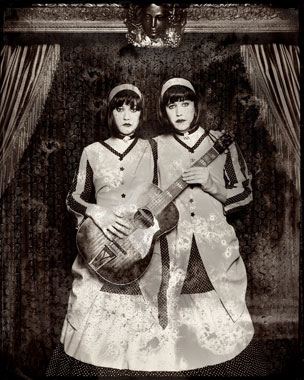


7. Evelyn Evelyn: Love Will Tear Us Apart.

Originally by: Joy Division. 

 A bit of background is necessary for this one - Evelyn Evelyn are supposedly a duo consisting of conjoined twins, singing and playing a variety of cabaret pieces in harmony. In reality, of course, they aren't - for a start, the two musicians are different genders. It does mean, however, that the song becomes a truly dark piece of humour, since if either of the twins falls in love, they will literally have to tear themselves apart. Also, it is undeniably a truly heartfelt performance of what is already a bleak eulogy for lost love.


6. Rammstein: Stripped.

Originally by: Depeche Mode.

This is a classic example of a song being rendered completely unrecognisable from its original form. Depeche Mode's slightly creepy ballad of desire becomes, in the hands of East Germany's teutonic metal lunatics, a crushing criticism on media control and post-communist confusion in their homeland, Till Lindermann's Wagnerian vocals taking it to operatic proportions. The video digs up another era of Germany's past, sampling Leni Riefentstahl's film of the 1936 Berlin Olympics.


5. The White Stripes: Death Letter.

Originally by: Son House.

It's debatable whether this actually counts as a cover, as the majority of Son House's work is now considered standard blues canon, but The White Stripes undeniably make this Depression-era tale of death and isolation their own. When performed live, Jack White showcases his slide playing at its best, battering the life of what is essentially an acoustic guitar and producing more sound than any one person should rightfully be able to. It's not a lament, it's a display of defiant anger directed at the cruelty of life.


4. Leon Russell: A Hard Rain's Gonna Fall.

Originally by: Bob Dylan.

Bob Dylan is unquestionably one of the greatest songwriters of the 20th Century, if not the very best. But when performing as a solo artist, he failed to match this with musical ability. As a result, much of his early work is pretty hard listening, with turgid guitar rhythms countered only by Dylan's often flat vocals. Enter Leon Russell: rock's archetypal southern gentleman may look like Gandalf, but he injects a much-needed boost into A Hard Rain's Gonna Fall, transforming it from a dirge into a righteous, soulful anthem on imminent nuclear warfare.


3. The Red Hot Chili Peppers: Higher Ground.

Originally by: Stevie Wonder.

There is little that hasn't already been said about both of the artists involved here. Stevie Wonder's plea for reason was in itself a technically impressive piece of music, showcasing his ear for electronic manipulation as well as complex rhythmic structures. The Chili Peppers had a solid enough foundation to work on, then, but certainly made the piece their own, from Flea's jaw-dropping introductory bassline to the en-masse chorus vocals to the furious thrash ending. Much like the above entry, it's a protest song given the kick it deserves thanks to the creative input of a musically superior artist.


2. Rodrigo y Garbiela: Stairway to Heaven.


Originally by: Led Zeppelin.

This cover is impressive not only on a musical basis, but also due to the fact that it's of one of the songs that literally every guitarist in the world can play. The virtuoso Mexican duo make it their own by starting out with a kind of classical cadenza, before moving onto free jazz and finishing off with aggressive rock. It's an entirely original reworking of a tune that has been done to death - and the fact that it has avoided coming under fire from Led Zeppelin fans (traditionally some of the most humourless people on the internet) is testament to its universal appeal.


1. Faith No More: Easy.

Originally by: Lionel Richie.

Mike Patton has covered a frankly ludicrous range of songs in his various incarnations, most of which have been performed only once, during live shows. It's generally agreed this habit was borne of a narcissistic desire to prove his ability to sing anything, which would be pretty objectionable were it not for the fact that he actually does have that ability. Easy was recorded as a single by Faith No More in 1993, during the period when they were beginning to leave the trail of being just another alternative rock group. What makes it brilliant is that it's not all that different to the original, and yet it's different enough that what was once a nicely-written easy listening tune becomes a world-weary declaration of resignation. Patton's voice soars effortlessly above the piano line, and by the time the guitar solo kicks in, the listener is left in no doubt that they have done the song justice. When covering a song called Easy, it makes sense that to do it well, you shouldn't be trying too hard.


TJGreenwood.

Album Review: Tenacious D, "Rize of the Fenix"

Published 3/6/12 on spiltinc.co.uk


It has certainly been a while since Tenacious D offered up anything new for our listening pleasure, and no one knows it better than the band themselves. Indeed, Rize of the Fenix was preceded by a YouTube release of an introductory video in which the duo recounted their activities since their ill-advised film project The Pick of Destiny flopped at the box office. Jack Black was shown living a life of Hollywood excess, while Kyle Gass locked himself in his basement constructing an elaborate plan of bitter revenge on his former bandmate. At the video’s conclusion the pair were reunited and vowed to record another album, rising, as it were, like the phoenix from the ashes.
Rize of the Fenix, then, is a comeback album about making a comeback album. From the opening title track, which urges fans to renew their (previously removed) band tattoos, to ‘The Ballad of Hollywood Jack and the Rage Cage’, which recounts events since their 2006 separation, the album remains wittily self-referential throughout. This includes the two spoken-word interludes ‘Classical Teacher’ – in which a world-famous classical guitarist is employed to get Kyle’s playing back into shape and things quickly turn weird – and ‘Flutes and Trombones’, dealing with a studio dispute over the band’s instrumentation. Elsewhere, the duo engage in blunt innuendo (‘Low Hangin’ Fruit’), a spaghetti western tale (‘Senorita’) and even end with a moderately serious ballad on the nature of growing old (’39′).
Of course, the album would be nothing without considerable musical talent to supplement the tomfoolery, and of course the pair offer this up in spades, especially since they have convinced Dave Grohl to return once more on drums. It has taken its time to arrive, butRize of the Fenix is a triumphant return for Tenacious D.
9/10.

Sunday, 13 May 2012

6 Songs That Made Good Films Great

Nothing can be as affecting in the cinema as a well-chosen song. I don't mean music that has been written specifically for the film, or songs that play over the credits, or musical numbers that are fully integrated into the plot. Instead, this about songs that already existed in their own right, but which directors chose to supplement their images, making these films much better than they would have been without:

6. All Saints: Pure Shores.

The Film: The Beach (Danny Boyle, 2000).

Based (not particularly well) on Alex Garland's cult novel of the same name, The Beach features a young Leonardo DiCaprio as the hero Richard, who journeys to a secluded commune on a beach in Thailand with a pair of French backpackers. Once there, his feelings for the female traveller (Virginie Ledoyen) develop to the point where they can no longer maintain their pretences and dive into the sea to make passionate love to the sounds of... a British girl band? Indeed, but All Saints were no Spice Girls: they were musically and lyrically self-sufficient, and Pure Shores is actually the perfect song to accompany the film's blossoming romance. Languid, summery and upbeat, it marks the point where the film stops trying to cram the plot of the novel into as short a space of time as possible and instead becomes a portrait of the idyllic environment of the beach, a place as yet unspoiled by the tourist trail. The underwater scene is a classic example of Boyle's eye-poppingly colourful visual aesthetic, meaning this scene alone pretty much makes the entire film worthwhile:


5. Gary Jules: Mad World.

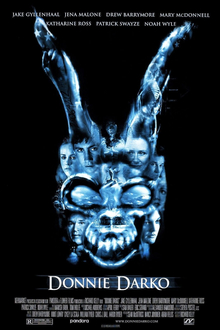
The Film: Donnie Darko (Richard Kelly, 2001).

Arguably a masterpiece even without this song, Donnie Darko is without question one of the most complex and confusing films ever made, right up to the concluding scene where (spoiler alert) a falling jet engine is sent back in time by the hero to crush him to death in his bed and thus prevent any of it from ever having happened in the first place. What makes that last scene so special, however, is undoubtedly Gary Jules' cover of the Tears for Fears song Mad World. As the truth about the film's characters is revealed in the moments leading up to Donnie's death is revealed, the song adds its own level of emotion to the plot, asking the question of whether the small-town concerns of any of the characters are really worth anything when viewed in the context of the "end of the world" that has been foreshadowed throughout the film. Either way, no one can deny that it all adds up to a poetically beautiful piece of cinema:


4. Stealers Wheel: Stuck in the Middle With You.

The Film: Reservoir Dogs (Quentin Tarantino, 1992).

The story of a failed bank robbery, sliced and diced into an almost incomprehensible order in trademark Tarantino fashion, Reservoir Dogs is actually fairly understated in comparison to the director's later works. There is, however, one brutal, iconic scene that stands out from the rest. Having captured a policeman and brought him back to his gang's warehouse, Michael Madsen's Mr. Blonde ties him to a chair and, with the sounds of Stealers Wheel's one-hit-wonder Bob Dylan spoof Stuck in the Middle With You echoing on a radio in the background, proceeds to cut his captive's ear off. Setting such a gory concept to inane musical backing is something that makes Tarantino unique as a director, and this scene stands out in Reservoir Dogs as the one that has been referenced and parodied countless times in other works. Yet at the same time the song's lyrics reflect the criminals' predicament: they are literally stuck in the middle of a city filled with police, with no way out. Be warned: while we are spared seeing the actual cutting itself, this is still pretty grim:


3. M.I.A.: Paper Planes.

The Film: Slumdog Millionaire, (Danny Boyle, 2008).

The second Danny Boyle film on this list, proving the director has a distinct sense for finding the right songs to complement his filmmaking. Slumdog Millionaire follows Jamal as he attempts to win a fortune on India's version of Who Wants to be a Millionaire, where, by a staggering coincidence, all of the questions match up to episodes in his life. A slightly improbable premise, but one with ultimately rewarding results, as it would take a heart of stone to resist the feelgood factor of the closing scenes. Sri Lankan/British hip-hop artist M.I.A. provides the soundtrack for one of the film's most affecting scenes as the young Jamal and his friend Salim try to make a living on the railways, the ever-changing background providing a glimpse of the majestic variety that makes up the subcontinent. The song is at once western and eastern, traditional and modern, the ideal complement to a film dealing with the rapid modernisation of the Third World as much as the adventures of its protagonist:


2. Mr. Loco: Religious Man.

The Film: Nacho Libre (Jared Hess, 2006).

Nacho Libre is the best film ever made about a Catholic monk who secretly dreams of leaving his life of piety to become a professional wrestler, and all other opinions are false. A large part of its appeal lies in the entertaining and charming soundtrack, mostly by US alternative hero Beck but also with contributions from Mexican artists. Religious Man was written by 1970s Mexican band Mr Loco, and features during the film's opening credits and penultimate scene as Jack Black - playing a Mexican version of his usual character - finally claims victory in the ring and saves the day for the orphanage where he used to work. It's a predictable ending, and one that would seem very tired were it not for the honest brilliance of this song: it is genuinely uplifting, and yet modest enough that the scene as a whole doesn't become overblown. Anyone who does not feel stirred when watching is a soulless automaton completely devoid of human emotion. Sadly neither scene seems to be available on the legal part of the internet, so here's the song on its own:


1. Elton John: Pinball Wizard.

The Film: Tommy (Ken Russel, 1975).

I know I said I wasn't going to allow musical numbers, but just watch: it's Elton John playing a pinball machine piano alongside The Who in a concert hall while wearing enormous shoes. It's a superlative example of postmodernist musical filmmaking, an explosion of sound and colour made at a time when the average television set was still black and white. It's one of The Who's better songs made great by an artist who many people now forget was actually a supremely talented musician. It seems incredible that the entirety of western culture didn't simply give up after having witnessed it. At the end of the day, it's the definitive example of how one song can raise the level of an entire film simply by its inclusion, and few others can match it.


TJGreenwood.

Single Review: Tom Jones, Hit or Miss

Published on spiltinc.co.uk, May 2012.


Surely the most popular, celebrated and successful singer to emerge from the depths of Pontypridd, Tom Jones has nonetheless been something of a forgotten entity for much of the past decade. Now, however, things seem to be on the up: an assured and entertaining showing as a judge/coach on the BBC reality show “The Voice” has moved him back into the public consciousness, and the veteran has decided to see in the fifth decade of his career – and the 72nd year of his life – by recording a host of new songs, culminating in a studio album.

“Hit or Miss” is Jones’ second single to be released recently, following on from the Jack White collaboration “Evil.” But while that song was a chest-beating, thumping blues number featuring Sir Tom’s vocals at their mighty best, “Hit or Miss” falls sadly short of that mark. The pleasantly low-key instrumentation lends the track a warm country vibe, but Jones’ voice is definitely beginning to show its first signs of aging, sounding more grizzled than soulful. The result of a lifetime of excess? Almost certainly, but the new, world-weary tone seems quite fitting as one of the music legends of the 20th century looks to head into the beginning of the end of his career with a pleasing amount of dignity.
Overall, a positive indication of things to come for Tom Jones.
7/10.

Thursday, 5 April 2012

5 Hugely Underrated Albums by Great Artists

We begin today with a little semantic clarification. When discussing underrated music, people often seem to confuse the word with underappreciated. This doesn't quite add up: for instance, none of the artists I mentioned in my last post could be accurately described as underrated because they're rated very highly by those who are aware of them. They just aren't very well known; hence, underappreciated. On the other hand, there is indeed a wealth of music out there that, despite less than humble origins, remains largely undiscovered by the world. The following are just a few of the hidden gems that have yet to break the surface of music history:

5. Chris Cornell: Euphoria Morning (1999)

In the years between the dissolution of Soundgarden in 1996 and their reunion last year, frontman Chris Cornell had something of a wilderness phase. Yet while the mediocre Bond theme You Know My Name and the dire Timbaland-produced album Scream may not be among his finer works, his solo debut is of a different character altogether. Despite being commercially unsuccessful, Euphoria Morning did receive positive critical reviews, and it's not hard to see why: as soon as the opening chords of Can't Change Me come crashing in, dripping with '60s-style reverb and backed by minimalistic drums and bass, it is clear that this is will be a well-produced, honest work. And indeed it is - gone is the grungy chordal style of early Soundgarden, as Cornell instead favours his later songwriting, presenting 12 original, polished alternative rock cuts that are far from the generic, radio-friendly post-grunge that began to dominate the airwaves at the turn of the millennium. Cementing his place among music's finest vocalists, Cornell switches between acoustic whimsy (Sweet Euphoria), Radiohead-esque ballads (Preaching the End of the World) and even a stripped-back blues track (When I'm Down). It may not be quite at the level of Soundgarden's Superunknown, which stands among the best albums of the 1990s, but Euphoria Morning definitely deserves a little more recognition as one of the most well-rounded works of Chris Cornell's career.


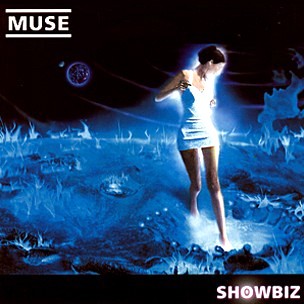
4. Muse: Showbiz (1999)

At around the same time Chris Cornell was launching his solo career, a three-piece rock group emerged from the wilds of Devon with a debut album and no shortage of ambition. They didn't know it at the time, but they would go on to be one of the world's biggest music acts, selling millions of albums and collecting a handful of awards in the process. Showbiz, however, has been relegated to the sidelines: it reached only 28th position in the UK charts on its release in 1999 and has been surpassed significantly by their four subsequent albums, all now considered milestone works in modern rock music. The reasons for this are not entirely evident, however. Ultimately, Showbiz delivers every musical element that made the band great over the following years, with influences ranging from Rage Against the Machine and Radiohead to Brahms and Beethoven. Matt Bellamy's voice sounds as good as ever, complemented by his shimmering piano lines from the off, while Chris Wolstenholme's earth-moving bass and Dom Howard's intricate drum work provide the backdrop for Bellamy's cathartic vocals. The songwriting, too, is strong, ranging from the heartfelt acoustic ballad Unintended to the stomping glam rock of Sober. Indeed, the album is considerably more coherent than the group's distinctly bland last release, Resistance. As for why Showbiz remains  Muse's forgotten work, we can only guess.


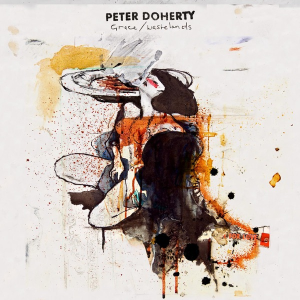
3. Peter Doherty: Grace/Wastelands (2009)

Singer/songwriter Pete Doherty is mostly famous for two things: his turbulent, drug-fuelled relationship with Kate Moss and his turbulent, drug-fuelled relationship with The Libertines. While the latter did in fact produce a large amount of significant music, the circumstances in which it was grounded meant that it was doomed to failure, as the group imploded in 2004. Doherty proceeded to spend his life in and out of rehab, and it seemed that one of the most promising talents of the early 21st century had gone to waste. Grace/Wastelands, however, was a sign that all was not lost. Opening with the jaunty acoustic track Arcady, the album showcased Doherty's songwriting prowess to its full potential, as he presents a bleak, bittersweet portrait of the modern world, through the eyes of a man who has seen it all. The title's hint at T.S. Eliot is no coincidence, as lines from his poetry are adapted into Doherty's songs, especially the creeping Broken Love Song. The album's 12 cuts run the gamut from indie rock to folk, by way of ballads and even a music-hall jazz number (Sweet By and By). The closing Lady Don't Fall Backwards is as heartbreaking a love song as any of the past decade. Ultimately however, it's actually not too hard to see why Grace/Wastelands was overlooked by the public - by 2009, they had lost interest in Doherty's headline-grabbing antics to the extent that, regardless of how accomplished a work of songwriting Grace/Wastelands may be, it was always destined to be simply a tragic reminder of what could have been for the space of more than just one album.


2. The Horrors: Strange House (2007)

The Horrors have found fame recently with two albums, Primary Colours and Skying, released in 2009 and 2011 respectively and earning the group significant mainstream airtime and a Mercury Prize nomination. Reminiscent of the ambient rock of Brian Eno and the psychedelic melancholy of '80s indie groups such as The Happy Mondays and The Smiths, they create vast, sweeping sonic landscapes of meticulous detail - at its best, breathtakingly beautiful music. Prior to this however, the band had unleashed a very different beast altogether. 2007's Strange House features none of the intricate subtleties of their later works, presenting instead a vigorous blast of gothic punk, embellished by crunching organs straight out of a vintage horror film. The work begins with Jack the Ripper, a grindingly slow cover of Screaming Lord Sutch's '60s jazz number. The band create a truly terrifying sound, with Joshua Hayward's guitar slithering around Rhys Webb's almost Oriental-sounding organ line and Rugby School alumnus Faris Badwan's surly vocals cutting through through the mix like a hacksaw through metal. Then, without warning, they kick into a higher gear, and the song becomes a frantic gallop of thrashing metal with enough intensity to rival early Metallica recordings. The tone of the album having been established, The Horrors continue with their frantic, hysterical aesthetic, from Badwan's melodramatic screeching on Gloves to the closing Death at the Chapel, which apes the fairground blues-rock of Dr. Feelgood. Yet what makes Strange House such an underrated work in The Horrors' back catalogue is not just its musicianship and evocative mood, but also the fact that they sound like a completely different band here, almost completely unrecognizable from their current selves. The album serves as a reminder of how a radical change of sound can sometimes prove beneficial for a group, while also forming the bedrock on which all of The Horrors' future success will be built.


1. The Beatles: Help! (1965)

Help! was The Beatles' 5th studio album, released just as the hype of Beatlemania was dying down and just before they began to redefine music history with Rubber Soul and Revolver. Spanning 14 songs, it's full of milestones tracks from the band's middle period, from the memorable title track to the now-classic Yesterday, which remains the most-covered song in history. Alongside those iconic tunes are the folksy Love Got to Hide Your Love Away, the pop-rock Ticket to Ride, George Harrison's love song I Need You: pretty much every song on the album foreshadows the elements of The Beatles' work that would go on to make them the greatest, biggest-selling group ever. Three part harmonies bubble to the surface above inspired chord progressions and Paul McCartney's melodic-yet-never-intrusive basslines, while Ringo Starr's drumming remains the foundation on which their songs are crafted. Help! was the moment when The Beatles stopped being just another Merseybeat pop group (regardless of how popular they may have been) and started to develop into a truly world-changing group of musicians. Yet it is never named as anyone's favourite Beatles work, and whenever a list of the greatest albums of all time is compiled, Help! is forgotten in favour of Sgt. Peppers and Abbey Road. It was a great album before The Beatles started to become famous for releasing great albums, and for that reason, it may just be the most underrated album of all time.

TJGreenwood

Album Review: Avatar - Black Waltz


Published in Warwick University student newspaper The Boar, March 2012.

When thinking of Sweden, there are a few things that spring to mind. Snow, Ikea, Volvo. The female supporters of their national football team. A positive, liberal attitude towards life in general. All nice things for sure. Musically speaking, the country’s output is largely along the same lines: when taken in comparison with the darker aesthetic of neighbours Norway and Finland, Swedish music tends to align with Scandinavia’s status as a community of healthy, prosperous people on top of the world. It’s ABBA and Robyn rather than Lordi and Immortal. Avatar, then, are an oddity: a melodic death metal band from Gothenburg; a combination that shouldn’t really work. Or does it?
Black Waltz begins in an unassuming fashion with Let Us Die: a single-note guitar riff is gradually manipulated by a phaser effect before being blended into the arrival of a second guitar. Then, before interest is lost, all Hell breaks loose. The band comes crashing in, drums and bass doubling the tempo and bringing the song up to the speed and intensity of a rampaging herd of elephants, with all the finesse to match as vocalist Johannes Eckerström contributes the expected death-metal roar. Over the top of the chaos, however, comes an indication that all is not as it seems: a singular, frenetic harmonica lick. That’s right – a harmonica in a Scandinavian metal album. Moving from the opening salvo, Avatar do not relent, and yet at the same time manage to sound significantly more cultured than they rightfully should. Torn Apart is somewhere between Muse and Enter Shikari, while the title track careers between a circus waltz, a heartfelt guitar line, and thunderous, off-kilter thrash. Closing with the majestically slow, 9-minute satanic metal/blues crossover Use Your Tongue really does seem an appropriate way to put an end to the madness.
Black Waltz is not just another uninspired release by a Scandinavian metal band with questionable musical ability and a predisposition for blowing up churches. The 11 tracks segue together as a cathartic symphony of bombast and terror - a demonstration of just how far a metal band can push themselves with the help of a little creativity, and actually pretty catchy on top of all that. Sweden should produce music like this more often.
4/5.

Thursday, 22 March 2012

The 5 Greatest Bands You've Never Heard Of

I'll be the first to admit that I have been known to be a hipster to a fairly extreme level. Scroll through my iPod and you'll find no end of artists that have ploughed through their careers without much mainstream recognition, relegated forever to the depths of obscurity. Not that I mind particularly - in keeping with that side of my personality, I kind of like the fact that I appreciate music that others may never get the chance to hear. Unsurprisingly, this kind of attitude comes in for a huge amount of abuse on the internet, simply because it's little more than arrogance. And so today I shall be playing my part in making the world just that little bit more aware of:

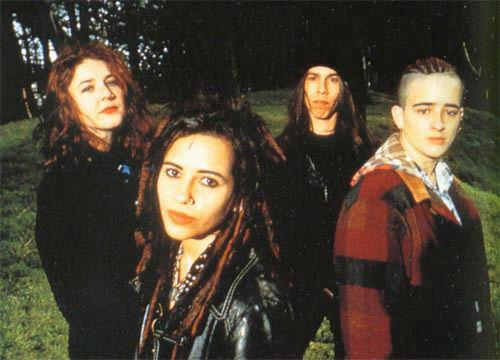
5. 4 Non Blondes

4 Non Blondes are a fairly typical case of the one-hit wonder. Emerging from South California in the early 1990s, they had some mainstream  success with What's Up? before disappearing from view completely. The group disbanded in 1994 while attempting to record a follow-up album to 1992's Bigger, Better, Faster, More! and that, effectively, was that. Nonetheless, Bigger was arguably one of the most underrated alternative rock albums of the decade, missing out on high chart positions but blending blues, rock, soul and funk with disconcerting ease. Opening with 1970s-style blues-rock (Train), the album slides effortlessly between genres until the chaotic acoustic funk-metal of No Place Like Home finishes off the work with a bang. The group's musicianship remains spectacular throughout, with vocalist Linda Perry being the standout member - her impressively powerful voice holds nothing back from beginning to end. What's more, the songwriting is as good as any other comparable band from the era.

Hipster Rating: 3/10

If you can't recall What's Up?, the video may help:


It remains one of the definitive songs of the era, and was even covered by characters from the cartoon series He-Man, which seems like a pretty good benchmark in terms of success. In addition, Perry went on to write songs for an impressive array of pop singers, from Alicia Keys to Christina Aguilera. It may not have been by the most conventional methods, but 4 Non Blondes actually did have their fair share of fame.

4. Rasputina

Nirvana aficionados may remember that, during the band's final tour, they were occasionally accompanied by a cellist. This culminated with their now iconic Unplugged Live in New York show, where said cellist performed alongside the group for the entire set. Her name was Melora Creager, and she had in fact been the leader of her own band, Rasputina, for a few years prior. Consisting of various combinations of cellists, guitarists and drummers over the course of their career, Rasputina dabbled in folk, cabaret, punk, industrial - pretty much any genre of rock music to have been successful over the past two decades was re-interpreted with their trademark vintage gothic aesthetic. Creager shines as a songwriter, her lyrics dealing with everything from media mind control to feminism, while the instrumentation of their music ensures Rasputina sound unique in the truest sense of the word.

Hipster Rating: 5/10

They only released one music video, because such things are too mainstream:


With The Olde HeadBoard weighing in at a ridiculously low 86,000 YouTube views, Rasputina are  pretty obscure for a band who toured with Marilyn Manson at one point, which is a decent claim to fame. Also, fans of Buffy the Vampire Slayer will have heard Transylvanian Concubine featured in an episode. Despite this, Rasputina's fanbase consists mostly of the (presumably very small) percentage of Nirvana fans who bothered to look up their cello accompanist and then actually liked her work, and intellectual goths. This level of talent deserves better than that, especially as the band are still going strong in the 20th year of their career.

3. The Black Box Revelation

Belgium's youngest garage punk two-piece exploded onto the scene in 2007, releasing 3 albums in 5 years. Well, exploded on Belgian radio - the rest of the world seems to be taking its time acknowledging the music of Jan Paternoster and Dries van Dijck. Their debut album, Set Your Head on Fire was a riot of minimalistic guitar, crashing percussion, and Paternoster's abrasive vocals. The pair shifted between blues, punk and even the odd acoustic tune, creating an enjoyable sense of cheerful experimentation. Following on from that, 2010's Silver Threats drove the group into darker territory, with a murky atmosphere and an ultimately heavier sound. The lyrical content was also noticeably more intense, with Paternoster coming across as a much more introverted vocalist. Last year's My Perception sent The Black Box Revelation in another direction again, with its cheerful and catchy pop-rock tunes melting into a lo-fi symphony that matches the Rolling Stones in their early prime.

Hipster Rating: 7/10

Their videos are consistently exceptional so this was a hard choice, but have a listen to Rattle My Heart from My Perception:

Then watch the videos for My Perception, Love Licks, Sleep While Moving and Never Alone/Always Together. These are among the most innovative audio-visual works of the past ten years, and yet the closest the band have come to mainstream success is being played on Zane Lowe's BBC Radio 1 show once. That said, they are still young, and a couple of their videos have exceeded the 500,000 views milestone on YouTube, so clearly they do have fans out there. Just not as many as they rightfully should have.

2. Tub Ring 

Chicago's most intellectual experimental punk act took off in 2001 after enlisting Mr. Bungle guitarist Trey Spruance as a producer.Their debut studio album The Drake Equation largely aped the chaotic sounds of Spruance's former group, yet while Mr. Bungle often took up to 10 minutes per song to transition between sounds and moods, Tub Ring crammed all of their insane, genre-bending hyperactivity into tracks generally less than 4 minutes long. The result was a breathless, frenetic blast of noise that does not make for easy listening. And yet at times Tub Ring switch into an altogether gentler mode, such as the piano ballad Numbers or the smooth jazz interlude on No More Refills. Since then, the group have continued to refine and define their sound, becoming increasingly more reliant on solid songwriting than musical shock value. The Fermi Paradox is a notably outstanding album, underpinned by a lyrical thread on mankind's unwillingness to accept scientific progress.

Hipster Rating: 9/10

As with Rasputina, Tub Ring apparently find music videos too mainstream and have only released two in their 9-year history. Here's Faster:

Not a single video related to their music has over 50,000 views on YouTube, and the vast majority are yet to be upgraded to 360p definition. They have never had an album or single in a mainstream chart position, and while their music may not be the most accessible, it's hard to understand why they are so much less popular than, say, System Of A Down or Mindless Self Indulgence, who began championing a similar sound at a similar time. For all of their effort and commitment, the band can claim Plain White T's as their most successful touring partners, which is quite unimpressive for a group with so much talent and versatility. With a career that has already lasted over 10 years, it looks like Tub Ring may never achieve the commercial breakthrough they deserve.

1. Major Parkinson

Comprising six slightly deranged individuals from Norway, Major Parkinson are actually the most recently-formed band in this list, having released their debut album in 2008. The self-titled effort was a somewhat cagey affair, mixing crunching guitars with acoustic heartache and clips of circus music. Vocalist Jon Ivar Kollbotn led proceedings, his voice switching between a seductive growl, a delicate falsetto, and the bark of a disgruntled Victorian aristocrat. The work as a whole was split in two by the tearjerking ballad Casanova, with the songs on either side forming a maelstrom of borderline chaos that throws itself in every possible direction and ultimately goes nowhere, in the best possible way. The album ends with the epic double closer pairing Awkward as a Drunk and The Greatest Love, summing up the whole gamut of emotions previously displayed. And if that wasn't enough, Major Parkinson completely redefined their sound with 2010's Songs From A Solitary Home, the heavy riffs replaced by vintage pianos, Hawaiian steel guitars, orchestral backing and a tuba solo. Again, the set is divided by a short ballad piece, this time the Tom Waits-style Card Boxes and ends with a double closer, the euphoric Adville and the world-weary The Transient. Music as ambitious as this does not appear often, and their third album, already in progress, should be well worth the wait.

Hipster Rating: 10/10

Despite all of this, you've probably never heard of them; they are pretty obscure after all. But unlike other hipsters who would want to keep it that way, I for one will happily promote their music to anyone who has bothered to read this far, or who will listen to me in the future. As with The Black Box Revelation, their videos are as innovative as anything else around at the moment, so I recommend you give all four a watch. The latest single, Heart of Hickory, is probably the most accessible so here it is:

And Death in the Candystore also deserves a mention in order to show the group's versatility:

In an ideal world, these guys would be bigger than the Beatles.

TJGreenwood.